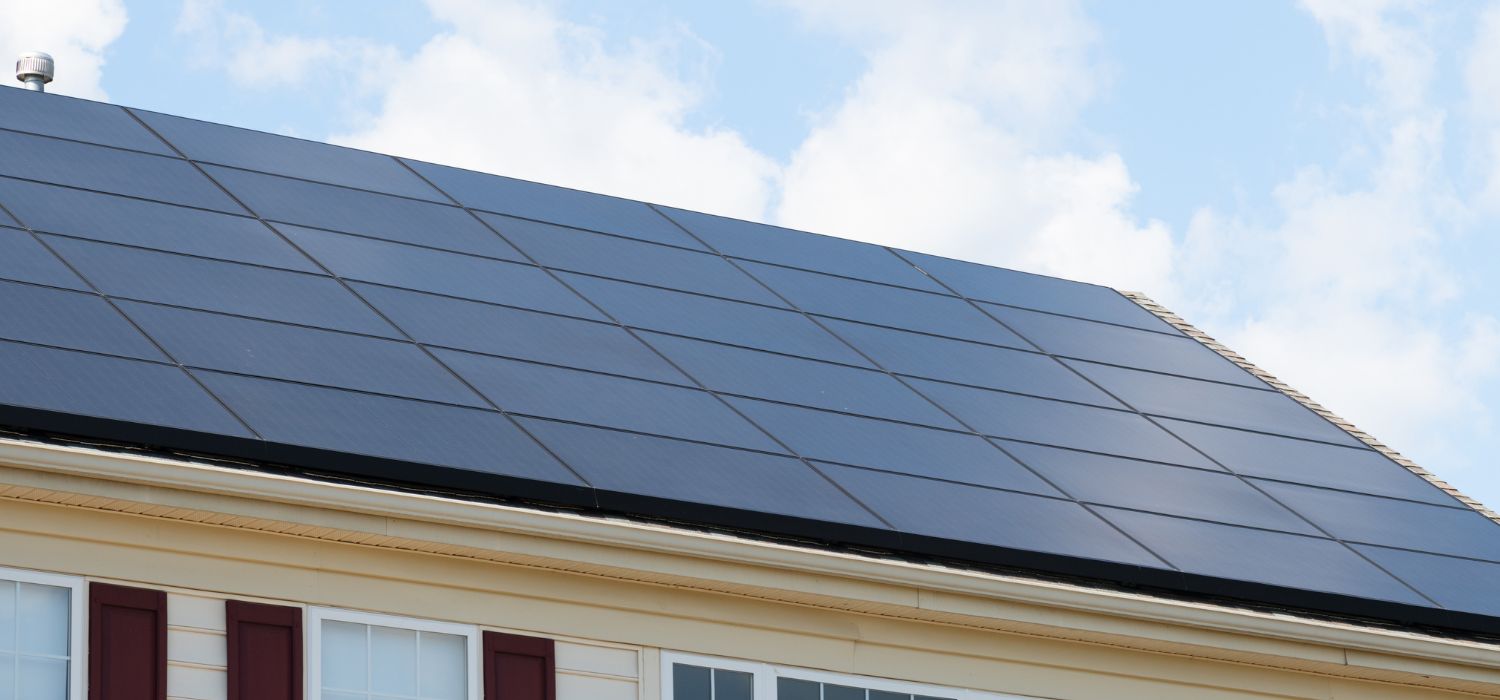
Residential solar panels are built for real life, not just picture-perfect, sunny days. Clouds roll in, seasons change, and rain happens. The real question is how well your solar panels perform when the sun is hidden and how much power you still get.
We’ll walk through how solar panels perform during storms, so you can see how systems maintain value over time. This guide also breaks down exactly what solar panels look like in cloudy, rainy conditions, and how it affects your monthly production.
Yes. Solar panels need light, not heat, to function. They convert sunlight into electricity using tiny cells that respond to photons in the light spectrum. Even when the sky is gray, your panels are catching scattered light that slips through the clouds.
On heavily overcast days, many systems still produce around 10%–40% of what they make under clear skies. Solar power drops in bad weather, but it rarely hits zero during daylight hours. Your system continues to generate electricity as long as there is some brightness outside.
Think about areas that see frequent storms, like the Pacific Northwest. Rooftop solar still grows in those places because systems are sized for the whole year. They’re not limited by the occasional overcast days.
Cloud cover varies significantly in density. A light haze is very different from a thick storm, and solar panel performance reflects that. Here is a simple breakdown of how the sky affects your array.
| Sky Conditions | Typical Output Compared To Clear Sun | What It Feels Like to You |
|---|---|---|
| Light clouds or thin haze | 60%–80% | Bright outside, no harsh shadows |
| Partly cloudy | 40%–70% | Mix of sun and shade passing by |
| Heavily overcast | 10%–40% | Dull, flat light all day |
| Severe storm or very dark clouds | Near zero to low | Feels almost like dusk at midday |
Because the equipment reacts to light levels instantly, power output will fluctuate. High clouds might only slightly reduce direct sunlight, while low, thick clouds have a bigger impact. Sometimes, clouds can even reflect sunlight onto the array.
This reflection causes brief power spikes. The day doesn’t follow a straight line from zero to full capacity. Panels continue to work through these changes, helping solar production remain active.
Rain feels gloomy, but it’s not the enemy of your solar investment. While you might see lower output on storm days, steady rain performs an important job. A common misconception is that rain prevents you from being able to produce electricity.
Clean glass helps your system perform at its best. Dust, pollen, and urban grime can obstruct sunlight and block the light reaching your cells. Studies show that dirty glass can significantly reduce annual energy yield.
Regular storms help rinse your system. This natural cleaning cycle allows solar technology to work better during the bright windows between rainy periods. Seasonal variations in weather help remove pollen and dust without any effort from you.
The right way to judge your system is by its yearly output. Solar energy companies and installers use decades of data to account for cloudy conditions. They factor in winter and storms when estimating your energy generation.
If you have net metering, you have a cushion during rough seasons. On sunny days, your array often makes more energy than you need. This energy generated is sent back to the grid for credit.
During gray periods, you use those banked credits. This mechanism helps panels ensure your costs remain predictable. Energy storage systems can also store excess power to help balance out grid usage.
You might think solar belongs only in the desert. Yet renewable energy adoption is high in cool, cloudy regions like Germany. These areas prove that solar panels in cloudy, rainy conditions shouldn’t stop you.
Solar panel efficiency and costs have improved over the last decade. Research shows that panels installed in mild climates still offer a good return. The payback periods are often quite reasonable.
Clouds do reduce solar output instantly, but the long-term math holds up. Cheaper hardware helps maintain long-term efficiency. The direct impact of weather is smoothed out by decades of operation.
Planning for a roof means designing for imperfect weather. A solid design considers how factors influence solar output. Here are the main factors to watch.
Use long-term sun data to predict weather patterns.
Account for shading that might reduce direct light further.
Check panel orientation to maximize light capture.
Verify roof space for capacity.
Consider energy storage and rate plans.
If your area has variable clouds, ask about microinverters. These devices let panels oriented in the same string work independently. If one panel is shaded, the others don’t lose performance.
Batteries store power for later use, which is helpful in spotty weather. A good setup with solar panels oriented correctly mitigates many weather issues.
Durability is a valid concern for outdoor equipment. Modern panels are tested to withstand wind and hail. Features like smooth glass help snow slide off easily in winter.
Extreme storms can cause damage, so checks are important. Installers will look for risks from trees or nearby structures. They mount the array to handle local weather patterns safely.
Daily rain usually does more good than harm. It cleans the surface for maximum absorption of light later. The wiring is protected to keep connections safe and dry.
Solar is a long-term financial play. Electricity generated over 20 years provides significant value. The drop in hardware costs has changed the game for solar power.
Home improvement analysts show that solar saves money in most markets. Year-round energy savings add up, even with rainy seasons. You pay for the system once, but it works for decades.
Homes with average sun still come out ahead. The savings aren’t destroyed by a single wet month. You can rely on your system to produce electricity consistently over its lifespan.
You can’t control the sky, but you can manage your usage. A few small choices lead to better energy independence. Here are tips to maximize your setup.
Ask for estimates that show expected drops during heavily overcast days.
Shift loads to use power when the panel output is highest.
Size the system based on year-round energy needs.
Trim trees that reduce solar panel access to the sky.
Watch your app to learn your solar rhythm.
Consider adding storage systems if your utility allows. Batteries store excess energy for use during storms. This gives you more control over your power.
Solar panels in cloudy, rainy scenarios might sound scary, but modern systems handle them well. Solar panels continue to turn light into power even when the sky is gray. Smart design and policies smooth out the dips.
Rain also cleans your panels, improving efficiency. It washes away grime so you can capture more energy later. You do not need perfect weather for a strong setup.
Next time the forecast is gray, you will know your system is still working. That understanding turns a purchase into a tool for savings. It gives you control over your bills regardless of the weather.
Address: 231 W Rutherford Blvd
Murfreesboro, TN 37130
Phone: 615-237-1737
Business Hours:
Mon - Fri: 7:30 AM - 4:30 PM
Sat & Sun: Closed